
The Emerging Threat of Quantum Computers
The world of Bitcoin is constantly evolving. Technological progress brings opportunities—but also new risks. One of today’s hottest topics is the potential impact of quantum computers on Bitcoin’s security. Well-known analyst Willy Woo recently drew attention with his warning that some Bitcoin addresses could become vulnerable once quantum computers grow powerful enough. His message is clear: it’s time to think about quantum security.
For years, Bitcoin has been considered one of the most secure digital assets thanks to its strong cryptographic foundations. Yet that security depends on mathematical principles that—at least in theory—could be broken by quantum technology. Although these machines are still developing, experts suggest it’s wise to be prepared.
What Does Willy Woo Mean by Quantum Security?
According to Cointelegraph, Woo warns that it’s no longer just about protecting your private key or seed phrase. In the era of quantum computing, the public key must also be protected. A sufficiently powerful quantum computer could theoretically derive a private key from its public counterpart.
Woo points out that the newest Bitcoin address format—the Taproot addresses (starting with “bc1p”)—are particularly vulnerable. These addresses embed the public key directly into the address itself. In a future where quantum computers can perform large-scale calculations, that could mean your private key might be reverse-engineered.
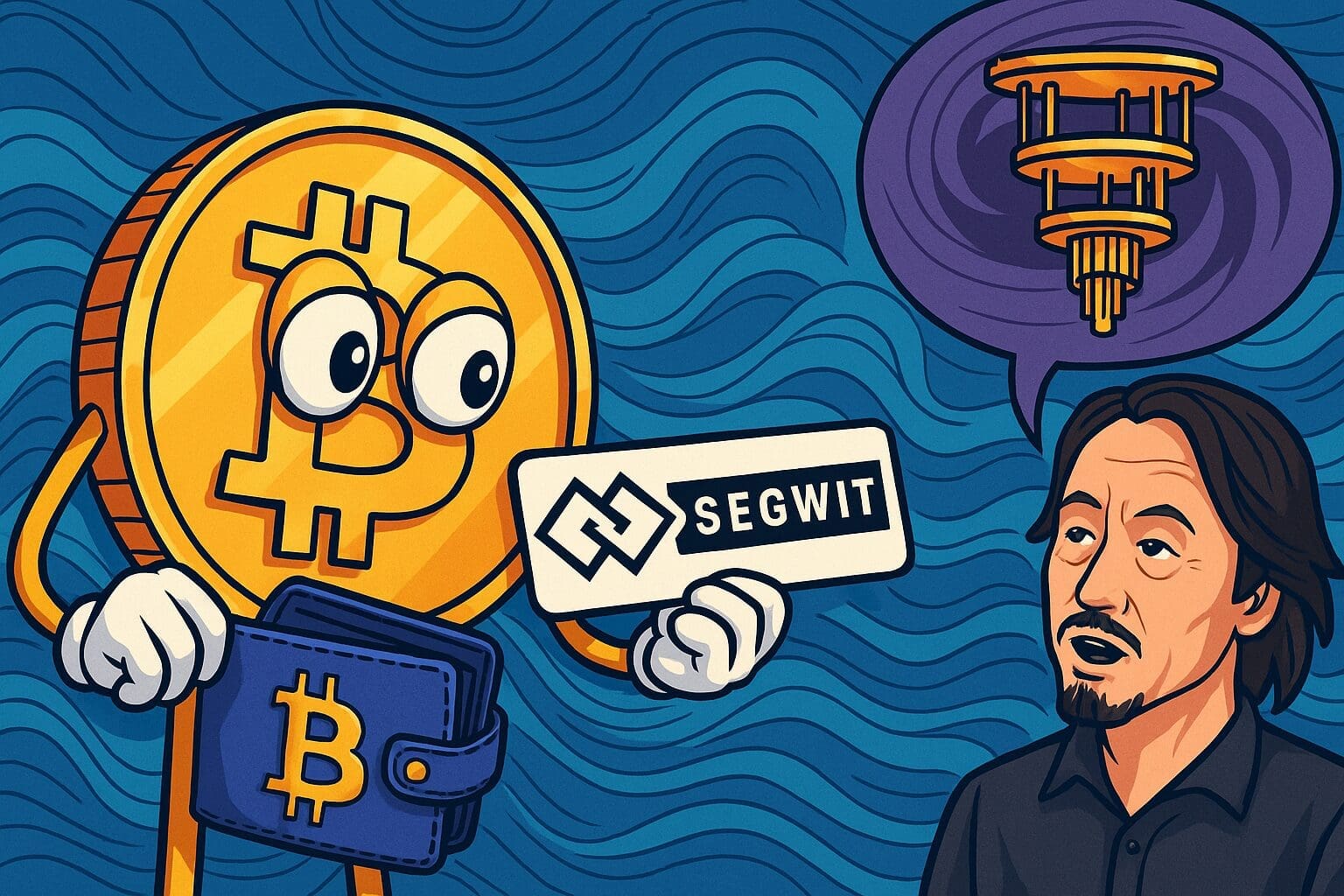
That’s why Woo advises Bitcoin holders to move their coins to older formats such as SegWit addresses (starting with “bc1q”) or legacy addresses (“1…” or “3…”). These older formats hide the public key behind a cryptographic hash, making them far more resistant to potential quantum attacks. As KuCoin explains, this prevents a quantum attacker from directly deriving the key.
DUMMIES GUIDE TO BEING QUANTUM SAFE.
— Willy Woo (@woonomic) November 11, 2025
In the past it was about protecting your PRIVATE KEY (your seed phrase). In the age of big scary quantum computers (BSQC) that are coming, you need to protect your PUBLIC KEY also.
Basically a BSQC can figure out your private key from a…
Why SegWit Wallets Are Safer
SegWit—short for Segregated Witness—was introduced in 2017 to make Bitcoin transactions more efficient. One major advantage is that SegWit only reveals the public key when a transaction is actually made. Until then, the key remains hidden behind a hash, meaning a quantum attacker has no direct access to it.
Taproot addresses, on the other hand, work differently. Taproot was designed to make transactions more flexible and private, but its structure exposes the public key earlier. In a future where quantum computers are powerful enough to break elliptic curve cryptography, this could pose a serious risk.
While current quantum computers are far from being able to break Bitcoin’s cryptography, it’s smart to think ahead. Just as you wouldn’t buy home insurance after a fire, it makes sense to secure your digital assets before threats become real.
How Real Is the Quantum Threat Today?
Most experts agree that practical quantum attacks are still years—perhaps decades—away. The technology is still in its infancy, and today’s quantum computers can only handle limited calculations.
Still, the long-term risk is real. Once a sufficiently powerful quantum computer is built, it could compromise the cryptographic foundations of Bitcoin and other blockchains. Many researchers in the Bitcoin community are already working on post-quantum cryptography—new algorithms designed to resist such attacks.
Woo’s warning is therefore mainly a wake-up call. He’s not saying Bitcoin is unsafe today, but that large holders—especially those leaving BTC untouched for years—should consider how and where they store their coins.
How to Keep Your Bitcoin Quantum-Safe
The first step toward Bitcoin quantum security is knowing which wallet type you use. Many holders don’t know what kind of address their wallet generates—but that’s crucial.
Check whether your addresses start with “bc1p.” These are the Taproot addresses Willy Woo warns about. They embed your public key directly into the address, which could become a vulnerability once quantum computers advance further.
If your wallet uses Taproot addresses, consider moving your Bitcoin to a SegWit address (starting with “bc1q”). These follow an older, safer structure where the public key remains hidden until a transaction occurs. This extra layer of protection means a potential quantum attacker can’t access your public key directly—making SegWit the sensible choice for long-term holders.
Only use wallets from trusted developers who actively maintain their software. Popular hardware wallets such as Ledger, Trezor, and Coldcard closely follow developments in quantum security and will likely be among the first to release updates when new cryptographic standards become available.
Another smart step is to store your seed phrase securely, always offline and in a location not connected to the internet. Even if future quantum computers can crack cryptographic keys, a seed phrase kept in cold storage will remain safe for now. Avoid digital copies or cloud storage, as those can be hacked.
You can also distribute your Bitcoin across multiple wallets. This reduces the risk that a single address becomes a future target, minimizing potential damage.
Finally, stay up to date with developments in the Bitcoin community. The debate about quantum safety has only just begun, but new cryptographic solutions are already being explored. According to Cybernews, awareness is currently the best defense. Staying informed allows you to react quickly as technology evolves.
In short, Bitcoin quantum security is about preparation, not panic. By taking small steps now—switching to SegWit, protecting your seed phrase, and staying informed—you can make your Bitcoin holdings future-proof without unnecessary worry.

What Does the Bitcoin Community Say?
Reactions to Woo’s warning are mixed. Some experts praise him for raising awareness of a complex issue. They argue it’s crucial for Bitcoin holders to understand that cryptography isn’t unbreakable forever.
Others are more skeptical. According to Forklog, the risk remains largely theoretical, and moving coins now might not be necessary. Moreover, switching to SegWit isn’t a permanent fix—once quantum computers are powerful enough, even those addresses will eventually become insecure.
What’s clear is that this debate highlights the need for continued innovation within Bitcoin. The community is already exploring post-quantum solutions, such as new signature schemes that resist quantum attacks. It’s likely that Bitcoin will eventually undergo a protocol upgrade to become fully quantum-resistant.
Should You Take Action Now?
That depends on your situation. If you’re an active trader or only hold small amounts of Bitcoin, there’s no reason for concern right now. The likelihood of quantum computers posing a real threat in the next few years is negligible.
However, if you’re storing a large amount of Bitcoin for the long term, it’s wise to prepare early. Move your coins to a SegWit wallet and monitor developments in quantum cryptography. This way, you can minimize long-term risks without unnecessary panic.
Technology evolves at lightning speed. What seems impossible today might be reality tomorrow. By acting proactively, you can protect your digital wealth from future threats.
🔐 Op zoek naar de veiligste manier om je crypto op te slaan?
Ontdek onze uitgebreide Wallet-pagina met eerlijke reviews, handige handleidingen en tips om je digitale assets optimaal te beschermen.
Lees welke wallets het meest betrouwbaar zijn, hoe je ze instelt en welke functies jouw crypto écht veilig houden.
👉 Ga naar de Wallet-pagina
Conclusion
Willy Woo’s warning about quantum security has sparked much debate—but his message is clear: be prepared. The quantum threat isn’t imminent, but its eventual impact could be significant. By storing your Bitcoin in SegWit wallets and keeping your public keys hidden as long as possible, you make your holdings safer for the future.
Bitcoin is built on strong cryptography and a community that continually innovates. By the time quantum computers become powerful enough to pose a real threat, new solutions will likely exist. Until then, it’s best to be prepared rather than surprised.
The discussion around Bitcoin quantum security shows that the crypto world never stands still. Those who take the right steps today can confidently face the future of digital value storage.